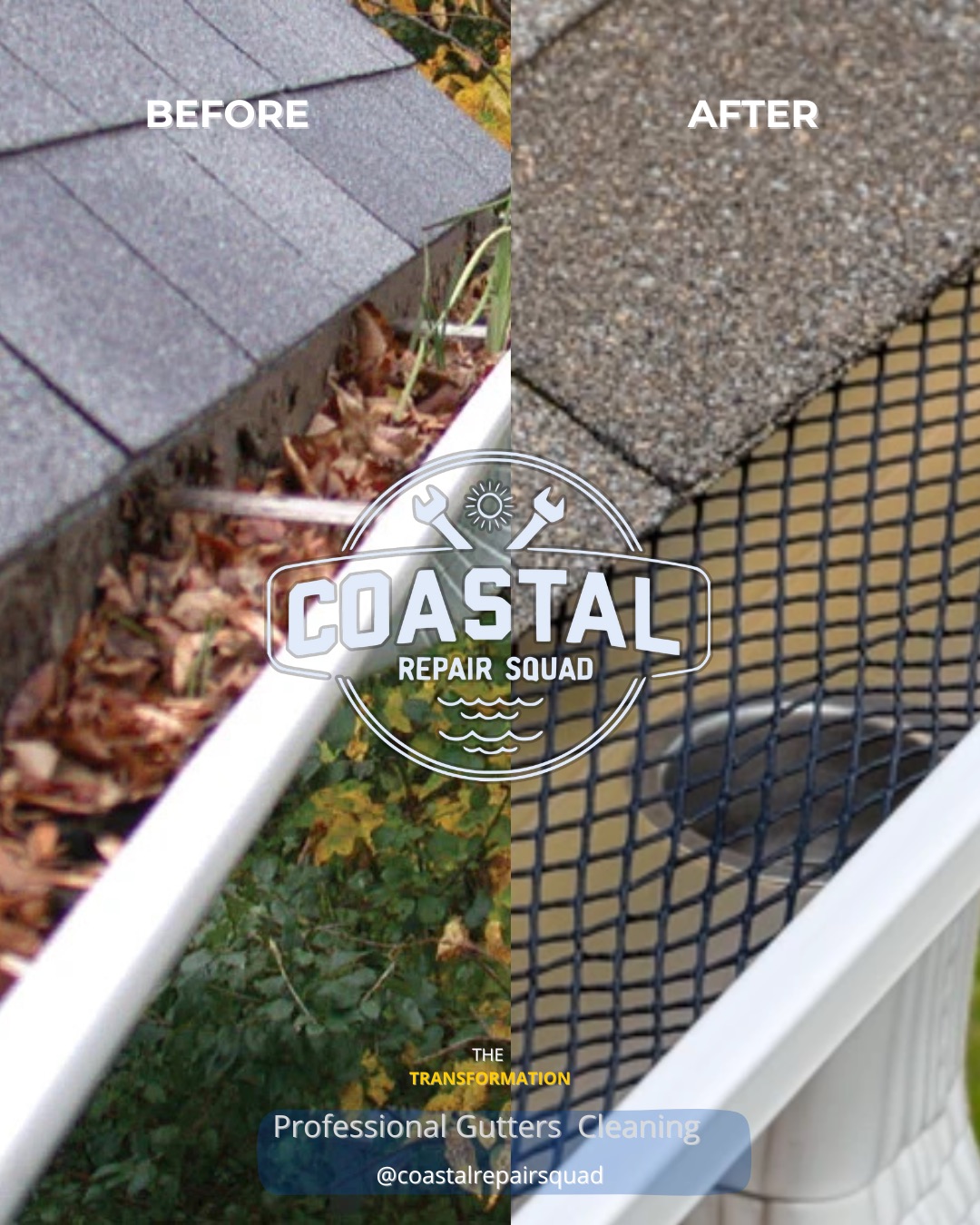
Clean the gutters before the rain tests them
A clogged gutter does not fail quietly — it overflows behind the fascia, soaks the soffit, and sends water down walls it was never meant to touch. Before storm season, clear the gutters and downspouts, confirm the downspouts carry water away from the foundation, and look for sections that sag or pull loose. If your roofline is two stories or the pitch is steep, that is a job to hand to a pro rather than a ladder and optimism.
Walk the exterior seals while it is dry
Water gets in through gaps you can see on a calm day: cracked caulk around windows and doors, gaps where siding meets trim, and worn seals around vents and hose bibs. Walk the house with a tube of exterior sealant and a scraper, or put the list together for a repair visit. Fifteen minutes of sealing in May is cheaper than the water damage it prevents in September.
Check the places water already wants to go
Look under sinks, around water heaters, and at washing-machine hoses for slow drips and soft spots — a small leak plus a week of storm humidity becomes a mold problem fast. Outside, make sure soil and mulch slope away from the foundation, and clear any drain or ditch line that is supposed to move water off your lot. Know where your main water shutoff is, and make sure it turns.
Photograph your home's condition now, on a good day
Take dated photos of every room, the roofline from the street, fences, and outbuildings before storm season starts. If a storm does damage your home, those "before" photos make an insurance conversation shorter and fairer. Store them in the cloud, not only on the phone that might be in your pocket during the storm.
Secure what the wind can pick up
Grill covers, patio furniture, garbage bins, and loose fence panels become projectiles in a coastal storm. Decide now what gets moved into the garage and what gets strapped down, and check fence gates for latches that actually hold. If a tree limb hangs over the roof or a dead tree leans toward the house, get a tree professional to look at it during the calm season — tree work is not a handyman job.
After a storm, document first and repair in the right order
When it is safe, photograph any damage before you move or fix anything. Stop active water first — tarps, shutoffs, buckets — then make the permanent repairs once things dry out. Group the post-storm punch list (fence panels, screens, drywall where water came in, exterior trim) into one repair request with photos, and Coastal Repair Squad can match it to a local pro with the price agreed before work starts.